
September 11, 2025
Friends,
I am excited to share this interview with Tal Tsfany, President & CEO of the Ayn Rand Institute and author of “Secrets of a Passionate Life: A Thinker’s Guide to Profound Happiness.”
I first read Ayn Rand’s The Fountain Head and Atlas Shrugged in high school, with both books helping to mold my developing world view. Atlas Shrugged, in particular, with its sharp plotline and unforgettable characters, ended up profoundly impacting my thinking to this day. It is a story set in a dystopian America in which business builders and entrepreneurs struggle to be productive amid “looters”, government bureaucrats, and burdensome regulations. Ultimately, many of society’s most productive leaders decide to go on a strike… Who is John Galt?! If you haven’t read Atlas Shrugged, I highly encourage that you do so.
Even more importantly, on a first date in 2002 with my now wife of 20+ years, Geniva, I learned that Atlas Shrugged was also her favorite book. No doubt about it, Ayn Rand is an important figure in the Martin household! (I also learned that she was a fan of the great George Gilder, whom I interviewed in Issue 3 of this newsletter: https://ragingcapitalventures.com/an-entrepreneurs-perspective-issue-3/).
I think you will enjoy this interview with Tal, which provides an overview of the Ayn Rand Institute’s good work, Ayn Rand’s continued relevance to the world today, the Institute’s plans for an Ayn Rand LLM as well as a new Ayn Rand Center near the new University of Austin, and much more. Also, here’s a link to hundreds of Rand quotes: https://www.goodreads.com/author/quotes/432.Ayn_Rand. Enjoy and please do help to support this Institute, as I do!
Upcoming Conference: October 9th in NYC
I am also excited to announce Raging Capital Ventures’ 4th annual Ideas & Networking Conference on October 9, 2025 at the Standard Hotel – High Line in New York City. We have confirmed four outstanding speakers (please note that Bob Robotti will unfortunately be unable to attend the event this year), including:
- Sumit Agarwal, co-founder of Shape Security (acquired by F5 Networks) and Ario, his current AI start-up.
- Alok Agrawal, previously ran Bloom Tree Partners, a long/short hedge fund seeded by Tiger. Began his investment career at Bessemer Venture Partners.
- Patrick Blumenthal, a venture capitalist with a focus on investing in frontier tech in areas such as energy, manufacturing, and defense.
- Phil Colicchio, an expert on the restaurant and hospitality industry who has represented over 60 James Beard Award-winning chefs.
The event will start with lunch at 12:30 PM and conclude with cocktails on the High Line River Terrace starting at 3:30 PM. See below for more information on the Speakers and Agenda and click here (https://ragingcapitalventures.regfox.com/2025-ideas-networking-conference) to register.
Space is limited — I hope you can attend!
Best Regards,
William C. Martin
Topics in this Issue of An Entrepreneur’s Perspective:
- Interview with Tal Tsfany, President & CEO of the Ayn Rand Institute: Who is John Galt?
- Save the Date: Ideas & Networking Conference, Thursday October 9, 2025
- Favorite Podcasts & Media
- Recent Tweets from @RagingVentures
**
Interview with Tal Tsfany, President & CEO of the Ayn Rand Institute: Who is John Galt?

Tal, thanks so much for joining us! To start, can you tell us a bit about your journey as an entrepreneur and how that led you to the Ayn Rand Institute in 2018?
In my twenties, back in Israel, I was fascinated with Scholastic Aptitude Tests (SATs). Their ability to discern potential intelligence was interesting to me, and I developed techniques to teach students how to get higher scores in a matter of weeks. I joined a company that specialized in SAT prep courses, and the owner decided to bet on me, a young 26-year-old, to become the CEO. In several years, I grew the company to be the largest private education company in Israel. I loved working in education, and that is primarily what I am doing today.
After graduating from college as a computer science engineer, I decided that it was time to dive deep into tech, as the internet boom was starting to happen. I relocated to the US with a big telecommunications company (Amdocs) and became a VP as the company grew into a multi-billion-dollar giant.
One day, as I was walking out of a meeting, one of the employees asked me if I had read Ayn Rand’s “Atlas Shrugged.” “No,” I replied, and the next day she gave me a copy of the book. That book exploded in my hands and in my mind and sparked a change process that led me to quit my lucrative job and join my brother-in-law, who started a startup company called “Base CRM” that developed the first mobile CRM (customer relationship management). We grew the company in Silicon Valley and then sold it to Zendesk.
Then it was time to embark on a new passion, which was philosophy and changing the world through the power of ideas. This is the reason I joined the Ayn Rand Institute. It is the most fulfilling job I can imagine having, as it involves education, promoting life-serving ideas, and fighting for the sacred ideas of happiness, human flourishing, prosperity, and freedom. I meet amazing people in my journey, and I am optimistic about our ability to bring about a new Age of Reason powered by Rand’s revolutionary ideas.
I first read The Fountainhead and Atlas Shrugged in high school; like you, I was “run over” by the brilliance of Atlas Shrugged. How old were you when you were introduced to Rand’s work, and how have her ideas shaped your life and career?
I read Atlas Shrugged and The Fountainhead at 39. I wish someone had introduced me to those books earlier in my life, as I believe it would have helped me steer my life toward more meaning and self-expression in my twenties and thirties. The character of Howard Roark in The Fountainhead gave me a new vision of how one should pursue a career and a life. His uncompromising attitude was an inspiration to me, and that led to many changes in my life. But more than anything, after diving into Rand’s nonfiction works, I discovered a world of knowledge that explained the answers to many questions I’ve struggled with earlier in my life. I regard Rand’s philosophy of Objectivism as an innovation in the field of ideas, and I work to educate more people about her discoveries.
How big is the team at the Institute, and what kind of programs does it oversee? What are you most proud of?
The Ayn Rand Institute (ARI) is an educational organization, and we have about 60 employees globally. We offer free books for students, run the world’s largest essay contests, and run conferences all over the world. We have advanced education courses and programs in Objectivism, which is in the process of being accredited as a Master’s degree. Most importantly, and what I am most proud of, is that we train a growing number of new intellectuals who can bring about a cultural change.
Any major historical shift–from Ancient Greece to Rome, from the Dark Ages to the Renaissance and the Enlightenment, from the Industrial Revolution to the bloody 20th Century, and the current age of Subjectivism–is all due to intellectuals determining the trajectory of a culture. The masses are oblivious to the core reasons and the origins of cultural trends. In her seminal essay “For the New Intellectual,” Rand describes the role of the intellectual very eloquently.
How active are you with high school and college students today? Can you tell us a bit about your course offerings?
Sure. We are distributing over 350,000 books a year to students around the world, and our goal for this year is to reach 500,000 books. We have student conferences in every major continent, and the interest in Ayn Rand is growing, as I believe that the current philosophical alternatives are getting less and less attractive. For the students who are interested in going deeper into Rand’s philosophy of Objectivism, we offer many online courses around ethics, politics, and other, more technical aspects like metaphysics and epistemology.
Our main goal is to offer the highest quality education possible, and this is why we are investing in growing our faculty with the best scholars in Objectivism.
I understand the Institute is building a new HQ near the University of Austin. What is the best way to support your organization as it expands?
We are very excited about the Ayn Rand Center project. I announced last year that we are embarking on this historical project to build a beautiful and inspiring building in Austin, Texas, with the objective of opening it by 2028. We have purchased the land and have begun planning the project as we continue to raise money for it. If anyone wants to take part in building a home for Ayn Rand’s legacy and ideas, we would be happy to talk to them. If the goal of turning our culture toward a new Age of Reason, liberty, and prosperity through Rand’s revolutionary system of ideas is dear to anyone’s heart, they are welcome to write to us at mail@aynrand.org.
How relevant is Ayn Rand’s work in the current cultural and political environment? What lessons can we apply, and what comes next? (It sure seems like Wesley Mouch & Co. has been in charge lately!)
History is shaped by philosophical ideas. Politics is a derivative of the common epistemological and ethical perspectives dominating the culture, while those perspectives are determined by philosophers, be it religious, conservative, or progressive thinkers. In her essay, “What Can One Do?” as part of her book “Philosophy: Who Needs It?” Ayn Rand writes:
“If you are seriously interested in fighting for a better world, begin by identifying the nature of the problem. The battle is primarily intellectual (philosophical), not political. Politics is the last consequence, the practical implementation, of the fundamental ideas that dominate a given nation’s culture.”
So Rand’s work is as relevant as ever, as she is proposing to improve on the thinkers of the Enlightenment and complete their task of building a philosophical foundation for human flourishing in a free society. She is offering a new moral (and secular) perspective to the American project, but that perspective requires us to rethink our deepest premises, including those we were raised on, namely, Altruism as the standard of the good. Both the political right and left are collectivist and altruistic in nature, so understanding Rand requires a different perspective and framework–not an easy task for most.
The Internet and semiconductor revolution have created a new generation of larger-than-life entrepreneurs like Bezos, Musk, Zuckerberg, etc. How does this class of titans compare to Hank Rearden, Dagny Taggart, Francisco a’Anconia, or Howard Roark?
Rand is the only philosopher to venerate the producer of wealth, identifying that the businessman is both a thinker and a doer, an integration of mind and body, which became possible by the American freedom and the industrial revolution that followed. Those titans of industry are geniuses in solving human problems, enriching our lives with more wealth, variety of options, time (cheaper products save us time), and beauty (I love my iPhone…).
Unfortunately, instead of creating an integrity and unity of philosophers who appreciate the achievement of the American businessman and producers who understand the need for new ideas that fortifies the case for the freedoms that make their creations possible, American philosophers and businessmen have turned against each other–philosophers patronize businessmen and are detached from reality, and businessmen ridicule the detached academics and are themselves detached from ideas and principles. What we get is a dichotomy of subjectivist academics and pragmatic (meaning unprincipled, “do what works” attitude) businessmen.
This is why you see that our leading businesspeople avoid ideas, morality, and philosophy at large. For them, ideas are dangerous and risky, and this is why they compromise, evade, and never stand up for the rights of business. The businessman is an oppressed minority that the entire regulatory state is intended to oppress.
In her essay “For the New Intellectual,” Rand calls for New Intellectuals: “The New Intellectual will be a reunion of the twins who should never have been separated: the intellectual and the businessman. He can come from among the best–that is: the most rational–men who may still exist in both camps. In place of an involuntary Witch Doctor and a reluctant Attila, the reunion will produce two new types: the practical thinker and the philosophical businessman.”
This is why we started the Atlas Circle initiative to bring together leading businesspeople and intellectuals and spark conversation at a different level. This could be the start of a powerful movement of thinkers and doers who are guided by reality-based ideas. If any leading business leaders are interested in learning more about it, they are welcome to contact us.
Ayn Rand had such a brilliant mind. In particular, I love her live interviews and debates. Do you have any favorites that you would recommend folks watch? Are there any lesser-known articles, essays, or books by Rand that you would recommend?
Oh, that’s a hard question. She is a fountainhead of insights, integrations, and new discoveries that enrich our understanding of the world and the human condition. Instead of choosing one thing, I would recommend a relatively unknown book called “Ayn Rand Answers,” where she gives answers to common questions and objections.
I would also recommend her Ford Hall Forum lectures from 1961 to 1981, which are all a tour de force of reason and clarity.
When will your Ayn Rand LLM database be ready?
ARI is a principled organization, which is why we are very careful about copyrights. We are in the process of creating an AI agent that will help guide and answer questions about Objectivism as reliably as possible without violating any property rights. We will announce its release as soon as we finish that project. I expect it in several months.
I want to mention that we are also in the process of creating the Ayn Rand Immersive Experience as part of the Ayn Rand Center, which will also have an online presence. Anyone curious about Rand’s novels and ideas will be welcome to experience an immersive, stimulating journey in our new building in Austin, Texas. This experience will include many digital opportunities to better understand their ideas, including opportunities to have a discussion with members of our faculty.
You recently wrote a book, “Secrets of a Passionate Life.” Can you tell us more?
Yes, my book was released in April 2025 and became an Amazon bestseller in its category. It is selling much better than I expected, and the responses are overwhelmingly positive. The book is a distillation of many insights I accumulated during the process of implementing the Objectivist philosophy in my thinking and actions. It led me to “upgrade” my life to a point where I am leading a fully expressive, highly fulfilling life, and to prove it, I have a podcast called “The Happiest Man Alive.” Other than the catchy name, I do offer a systematic, value-oriented approach to defining one’s authentic, rational set of values and turning them into an actionable plan, which is where we find meaning and which is the essence of the pursuit of happiness.
I found that many successful professionals struggle in finding meaning and happiness as they lack the introspective skills required to connect with their true, authentic passions and replace dutiful pursuits (the money, status, prestige, and other “boxes” we are taught to check by our culture) with happiness-bearing ones. There’s another podcast called “The Unhappy Millionaire” that I created with my colleague Don Watkins that talks about this issue in detail. Most of my free resources can be found on my website – taltsfany.com.
Who is John Galt?
That is the question that should motivate anyone who has not read Atlas Shrugged yet to dive into that masterpiece.
Thank you!!
**
Ideas & Networking Conference – Speakers & Agenda

EVENT DETAILS
THURSDAY, OCTOBER 9th, 2025 – 12:30 PM
THE STANDARD HOTEL – HIGH LINE, NEW YORK CITY
THE HIGH LINE ROOM – 3RD FLOOR
LUNCH, SPEAKERS, & COCKTAILS ON THE RIVER TERRACE
HOST

William C. Martin, Raging Capital Ventures
Bill will lead a series of Fireside Chats with our featured speakers, including former hedge fund manager Alok Agrawal, successful entrepreneur Sumit Agarwal, frontier tech venture capitalist Patrick Blumenthal, and renowned restaurant industry consultant Phil Colicchio. Together, we’ll explore the latest developments in AI and technology, analyze the current market landscape, discuss geopolitics and the Ukraine war, and identify actionable investment opportunities — plus much more. You can view Bill’s bio here.
AGENDA
12:30 PM // Meet and Greet
1:00 PM // Welcome
1:30 PM // Guest Speakers
3:30 PM // Cocktails on the River Terrace
GUEST SPEAKERS
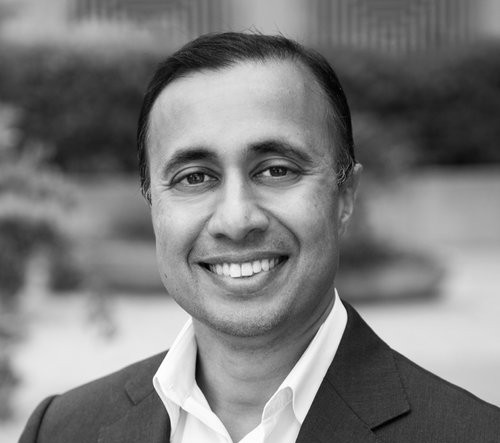
Sumit Agarwal, CEO & Co-Founder, Ario
Sumit Agarwal is a successful serial entrepreneur and former public servant. His current startup is Ario, which is building the data enablement layer for consumer AI. Sumit previously co-founded Shape Security, a cybersecurity company acquired by F5 Networks (FFIV) for $1 billion, and Quova, a geo-location startup acquired by Neustar. He was also an early employee at Google (GOOG), where he led mobile and advertising product teams. Sumit was also a Major in the U.S. Air Force and served as a Deputy Assistant Secretary of Defense, where he focused on cybersecurity. He is a graduate of MIT.
Sumit will give us an update on the current AI landscape and how he sees AI technology evolving in the future, among other discussion items.

Alok Agrawal, Founder & Managing Director, Bloom Tree Partners
Alok Agrawal is a successful hedge fund and venture investor. He managed Bloom Tree Partners, a global equity long/short fund with a broad sector focus, for over 15 years, reaching peak assets of $2 billion. Bloom Tree was seeded by Tiger Management, where Alok previously worked as both an analyst and co-portfolio manager. He began his investment career at Bessemer Venture Partners, where he led investments into companies such as Skype. Alok is a graduate of Harvard Business School, where he was both a Siebel Scholar and Baker Scholar. He holds an M.S. in Computer Science from UC Berkeley and a Bachelor of Technology from the Indian Institute of Technology, Kanpur.
Alok will share his views on the latest trends in technology and artificial intelligence, discuss markets and politics, and share details on a current project he is working on.

Patrick Blumenthal, Founder, Anomaly Fund
Patrick Blumenthal is an emerging venture capitalist with a focus on frontier technology. He is the founder and general partner at Anomaly Fund, as well as a fellow at FAI, a tech policy think tank. He previously worked at Village Global, a $500M fund backed by Jeff Bezos, Bill Gates, and Mark Zuckerberg. He has invested in companies such as Anduril, Allen Control Systems, and dozens of other startups. He also worked at On Deck, a Founders Fund & Tiger Global portfolio company, as it grew from four people to over 250.
Patrick will tell us about the latest developments within frontier areas of venture-backed technology like energy, manufacturing, and defense — including observations from his trips to Ukraine.

Phil Colicchio, Founder & CEO, Colicchio Consulting
Phil Colicchio is an expert on the restaurant and hospitality industry. His firm, Colicchio Consulting, advises hotel and real estate developers, as well as universities, professional sports, mega yacht, and music festival industries, on high-profile, culturally relevant food and beverage partnerships. Phil, who is also an attorney, has represented over 60 James Beard Award-winning chefs, restaurateurs, and industry professionals. He played a key role in the Las Vegas restaurant boom, brokering major management and licensing deals between chefs and hotel-casinos. A graduate of Seton Hall University and Villanova Law School, he is also a founding member of CenPer Holdings, LLC, which has partnered with Warner Bros./Discovery to launch the “Central Perk Coffee Co.” brand of café’s and coffee products worldwide. Employing his experience and expertise for the benefit of the next generation of hospitality leaders, Phil collaborated with Culinary Institute of America to design and launch its Masters’ in Professional Studies program, where he continues to teach graduate courses on Real Estate and Capitalization Strategies for Restaurateurs.
Phil will give us some insights into the current business models found within the restaurant industry, discuss the growing national importance of food halls, and fill us in on the latest moves by hot chefs and restaurants.
**
Favorite Books & Media
Tetragrammaton with Rick Rubin: Bob Pittman
This podcast provides a great overview of Bob Pittman’s legendary career, starting on radio in high school before joining NBC (and overseeing Don Imus and Howard Stern) and then launching MTV. Later, he worked with Henry Silverman at Cendant and was the COO of American Online (and AOL Time Warner) during its heyday. Currently, he is the CEO of IHeartMedia (NASDAQ: IHRT). Rubin is a great interviewer and Pittman has so many stories, plus many relevant observations about the current media landscape.
https://podcasts.apple.com/us/podcast/bob-pittman/id1671669052?i=1000719761633
Capital Allocators – Inside the Institutional Investment Industry
Ted Seides interviews Tim Sullivan, who recently retired as head of Yale’s private markets group after 39 years. Tim joined Yale just after graduation and only a year after David Swenson took the helm, so he had a front row seat to numerous cycles and great change in the endowment and investing industries. Sullivan argues that it is a “different world” for returns now, with high multiples and frenetic competition in LBOs and private equity. In venture capital, he notes that only a handful of firms get the first look at the best “lottery tickets.”
Dwarkesh Podcast: Stephen Kotkin — How Stalin Became the Most Powerful Dictator in History
Kotkin is a Fellow at the conservative Hoover Institute at Stanford who has written the definitive series of books on Stalin, and this podcast is a wonderful history lesson. He digs into Stalin’s early years and rise to power and argues that it was far from obvious that Stalin would grow up to be the ruthless dictator that he ultimately became. However, Stalin was willing to be ruthless and Kotkin highlights out the blind spots that arise during an ideological movement. He also highlights the challenges that authoritarians face in their challenge to maintain control while also being internationally competitive, which has applicability to Xi and China today. This is the latest Dwarkesh podcast that has focused on geopolitics and history that I have enjoyed, in addition to his usual AI-focused work.
Will Thorndike on the Power of Compounding in Investments, Relationships and in Life
Thorndike, who authored “The Outsiders: Eight Unconventional CEOs and Their Radically Rational Blueprint for Success”, has attracted a cult following in the investment community due to his disciplined approach to capital allocation, as well as his work with “search funds.” (I personally benefited from his work by investing over many years in CNX Resources (NYSE: CNX), a natural gas and pipeline company where Thorndike is Chairman). This podcast is a nice introduction to Thorndike’s thinking and I appreciated his recommendation to young people to “feed their curiosity and be thoughtful about their first jobs” (and be willing to be out-of-the-box).
**
A Selection of Recent Tweets from @RagingVentures:
Where were all of the “Banana Republic” tweets when Senators’ Warren & Brown claimed the scalp of Fed Vice Chair and Trump appointee Rich Clarida in January 2022?
Biden nominated Lisa Cook to the Fed Board on the same day that Clarida was forced to resign due to perceived…
— Raging Capital Ventures (@RagingVentures) August 26, 2025
This podcast definitely tested my assumptions that natural gas & other baseload energy would primarily power AI demand in the future.
The guest, Casey Handmer, argued that by 2027 solar + batteries will power 90% of incremental AI energy demand — due to continued falling solar…
— Raging Capital Ventures (@RagingVentures) August 21, 2025
Perry Sook $NXST: “everybody is talking to everybody” pic.twitter.com/34kvIn3Ykz
— Raging Capital Ventures (@RagingVentures) August 10, 2025
This is a great letter from @hkuppy that really spoke to me as a former hedge fund manager.
It is a very transparent assessment of his recent challenges and mistakes followed by a lucid outline of the adjustments he is making to get back to basics.
Also some thoughtful… https://t.co/YGfLqYmSGv
— Raging Capital Ventures (@RagingVentures) August 11, 2025
Interesting interview with Danielle DiMartino Booth, highlighting how Powell is playing politics and how the Fed is behind the curve on rate cuts. Specifically, she calls out very weak ex-gov job trends and falling owner equivalent new rent rates. https://t.co/5edVHm2Ucr
— Raging Capital Ventures (@RagingVentures) August 11, 2025
Ackman on the prowl for a $1-2 b insurance acquisition at $HHH, outlines Buffett’s unique approach pic.twitter.com/OvqBdVqpke
— Raging Capital Ventures (@RagingVentures) August 10, 2025
$NGL mgmt commenting on $WES acquisition of $ARIS; $NGL bought back 3.5% of its LP units at $4.30 per share in the latest Q pic.twitter.com/Gny6XJeSyo
— Raging Capital Ventures (@RagingVentures) August 10, 2025
This looks like a great project, bringing Permian natural gas to New Mexico and Arizona. $5.3 billion of capex. $ET https://t.co/ivW1UawQ2g
— Raging Capital Ventures (@RagingVentures) August 6, 2025
I have been hanging around the $RKT short with mixed results, I now realize $COOP is the better way to play this given the float dynamics – and in wake of recent strength which has narrowed the deal spread. I shorted $COOP today.
— Raging Capital Ventures (@RagingVentures) July 22, 2025
Trump isn’t thinking big enough: He should push to end the Federal Reserve altogether.
The Fed is a central planning vehicle with the most dismal of track records – including inflating the housing bubble that led to the GFC, and implementing ZIRP which enabled politicians to…
— Raging Capital Ventures (@RagingVentures) July 16, 2025
I love these big $IWM rebalancing days…
The algos usually have things well mapped out in advance, but the final release of ongoing buying/selling pressure often leads to important turning points in individual stocks (often in the opposite direction of the prevailing action).…
— Raging Capital Ventures (@RagingVentures) June 27, 2025
**
“Money is the barometer of a society’s virtue. When you see that trading is done, not by consent, but by compulsion–when you see that in order to produce, you need to obtain permission from men who produce nothing–when you see that money is flowing to those who deal, not in goods, but in favors–when you see that men get richer by graft and by pull than by work, and your laws don’t protect you against them, but protect them against you–when you see corruption being rewarded and honesty becoming a self-sacrifice–you may know that your society is doomed. Money is so noble a medium that does not compete with guns and it does not make terms with brutality. It will not permit a country to survive as half-property, half-loot.” – From Francisco d’Anconia’s “Money Speech”, Atlas Shrugged, Ayn Rand