
November 5, 2026
Friends,
We are pleased to share edited excepts from our October 1st Ideas & Networking Conference fireside chat with David Orr, founder and CIO of Militia Capital, a top-performing hedge fund, and portfolio manager of the Militia Long/Short Equity ETF (NASDAQ: ORR). Together, these two entities have more than $800 million of assets under management. David was previously a professional poker player and is well-known on Twitter for his outspoken views on investing.
Our discussion focused on David’s unique approach to investing, including managing a portfolio of approximately 500 securities with no junior analysts. He also explained his approach to managing correlation and factor risk, particularly on the short side where he has generated significant alpha. David shares numerous stock ideas including his favorite Japanese stock. Always opinionated, David also entertained us with a series of sharp opinions during the “Lightening Round” at the end. I am confident you will find great value in this interview. You can follow David on Twitter at @orrdavid.
Additionally, we are pleased to share (below) three ideas that I presented at the conference: Comcast (NASDAQ: CMCSA), where a proposed corporate separation could help to unlock substantial value; Zillow (NASDAQ: Z), a contrarian way to invest in a deeply depressed housing market; and gold, which I continue to favor amid growing fiscal and monetary risks.
Have a great Thanksgiving. Enjoy!
Best Regards,
William C. Martin
Topics in this Issue of An Entrepreneur’s Perspective:
- Interview with David Orr, Founder & CIO of Militia Capital: Hedge Fund Manager David Orr Shares His Approach to Investing & Risk Management
- Conference Highlights: Our Favorite Investment Ideas
- Favorite Podcasts & Media
- Recent Tweets from @RagingVentures
**
Interview with David Orr, Founder & CIO of Militia Capital: Hedge Fund Manager David Orr Shares His Approach to Investing and Risk Management

This fireside chat took place on October 1, 2026, at the Raging Capital Ventures Ideas & Networking Conference. ChatGPT was used to format and lightly edit the original discussion, using a “formal conversation” prompt.
Thanks, David, and welcome! We appreciate you coming in from Osaka. First, an important question: Where is the food better, Osaka or New York? People say Osaka has amazing food.
New York. I think there’s an anti-American bias in food ratings. Europeans don’t want to admit that Americans now have the best food in the world.
We really appreciate you being here. Like many of us, I first got to know you through Twitter. I’ve followed you for years and have always been impressed by your insights, creativity, and candor – which can be entertaining at times. Your fund has delivered remarkable returns and I’m fortunate to be an investor. My goal today is to understand how you do it. Let’s start with your background: You began as a professional poker player. How did that lead you into money management?
I started playing poker in high school and continued through my early university years. I was pretty good, although the games were much easier back then, which is largely why I made money. I expected to go into accounting and interned at a public accounting firm during the peak of the financial crisis. That internship didn’t lead to a job, and I didn’t want to move back in with my parents. I decided to become a much better poker player.
I played professionally for about eight years, until 2016. Then, seemingly overnight, very strong players appeared who were playing nearly perfect poker. In hindsight, I suspect many were bots, following the release of a poker solver that year. It was like a chess engine suddenly becoming better than human players and beating everyone. I realized I needed to find something else, and I was tired of poker anyway.
I had saved some money and was teaching myself investing, initially just to manage my own capital. My idea was to take a little more risk in exchange for potentially higher returns. This was in 2017, before I’d even managed a portfolio. I was studying market anomalies and how to use leverage appropriately.
Do you think your approach to investing draws on your poker experience?
Yes. I view each stock or factor as a bet with an expected value and a downside risk. I look for opportunities with positive expected value.
You followed that approach for a couple of years before formally launching the fund in 2021. What prompted you to take that step?
Good returns. People wanted me to launch a fund, so I did.
You taught yourself investing in a relatively short period. What was that process like? What worked, what didn’t, and what did you learn?
One of the first anomalies I invested in was XIV, a short-volatility fund that was essentially a leveraged bet on the stock market. This was in early 2018, before I’d really managed a stock portfolio. The fund collapsed, and I didn’t know what to do. I called my friend Galen, who had worked in the industry, and asked what to do about a position that was down roughly 90%. He didn’t know, but he knew whom to ask. That led me to Rob, who I think is in the audience today. Rob taught me a great deal about short selling early on.
The fund was essentially selling volatility — what people call picking up pennies on the railroad track. And then the train arrived.
Exactly. The surprising part was that nothing obvious had happened in the world; the fund seemed to implode on its own. It was trading around $15 after hours, and I asked Rob what to do. He said he was trying to short as many shares as possible across his brokers because the net asset value was $7. I couldn’t believe it: How could something trade at $15 if its NAV was $7? Could the opportunity really be that straightforward? That’s the kind of trade Rob looks for. He waits until the outcome is effectively clear, then puts capital to work. I thought, if that’s possible, what else is possible? And I kept learning from there.
Do you still invest in structured products or specialized ETFs like that?
Occasionally. If I notice an opportunity, I’m willing to invest in almost anything. However, my primary focus is on buying and shorting individual stocks.
How many positions do you hold on the long side?
Today I have about 200 long positions and 300 short positions.
Do you have analysts selecting stocks, or is that entirely your responsibility?
It’s just me.
With 200 longs and 300 shorts, how do you manage correlation and monitor so many holdings?
The holdings have some correlation with the market, but I’ve run the portfolio beta-neutral since inception. Airports illustrate how simple a thesis can be: You’re betting that passenger traffic increases over time. I don’t even need to read every earnings report. Once a year, I check whether passenger numbers increased. If they did, the fundamental thesis is on track. The other key consideration is the government’s regulatory review, which typically occurs every five years. You need to understand whether the outcome could disadvantage shareholders. Those are the two main variables I focus on. Other investors spend time analyzing details such as precise tax rates. I don’t think that level of detail is useful for this particular thesis.
How do you organize the portfolio and control risk across so many positions?
I’m roughly 200% long, and I organize positions into roughly 30 correlation buckets. I treat airports as one bet because they respond to global travel demand and tend to trade together. Another event like COVID, for example, could reduce demand across the entire group.
Where does the excess return come from in businesses like airport operators?
For some reason, Mexican airport operators were trading at around 12 times earnings, despite being very high-quality businesses. Each additional passenger costs the airport very little, so incremental revenue flows almost directly into operating income. In that case, I think the market had been underpricing the business for 20 years. You can see it in the long-term returns, which have compounded rapidly.
Let’s turn to your 300 shorts. What kinds of businesses do you target, and what is their average beta?
I’m about 140% short today, and the average beta of those stocks is probably between 1.5 and 2. I focus on businesses with poor prospects. Kohl’s (NYSE: KSS), for example, is a struggling mall retailer. I’ve also shorted weaker mall operators. In general, I look for businesses whose products or services I believe are becoming obsolete.
With 140% gross short exposure, that puts your beta-adjusted short exposure at roughly 200% to 250%?
Yes.
What does the long side look like?
I’m about 220% long today. Those holdings have a beta slightly above one because I don’t generally own defensive companies like Coca-Cola (NYSE: KO). Those are normalized estimates, though. Betas are behaving strangely in the current market — Berkshire Hathaway (NYSE: BRK.B), for example, has a negative beta right now. It’s an unusual environment.
So, in aggregate, you’re running roughly 400% to 500% in beta-adjusted gross exposure?
Yes. On a beta-adjusted basis, I’d put it at around 500%.
How do you keep volatility low with so much leverage?
The portfolio contains many different correlation buckets. They provide genuine diversification because their risks aren’t closely related beyond their exposure to the overall market.
Your hedge fund is now managing close to $500 mm and you directly oversee about $135 mm of that amount. You also have several portfolio managers. How did you find and develop the other portfolio managers?
The first guy I found on Twitter, his name is Rodrigo (@RodriGo_ethe). I’ve written about him in my letters. He was a Spanish government worker. He was just working this job, one hour a day on average. The rest of his day was just empty. So he would play the stock market. He was posting his track record on Twitter, like a 1.8 or 2 Sharpe in his personal account, and I’d been following. It was also a very wide basket of stocks. It wasn’t like a handful of winners drove all the return, which could be luck. I just reached out to him and asked him if he wanted to run a portfolio in my hedge fund. I started him real small. I gave him, on the first day, $1 million. Then when I saw his risk and everything was fine, I upped him to five. Over time, I kept upsizing him and now he’s got like $170 million. He now has a bigger partition than me.
Why did you launch the ORR ETF alongside your hedge fund?
One of my big ideas is that large AUM doesn’t mix with the large hedge fund fee, because the larger AUM will kill your returns. That usually reaches an equilibrium where any alpha that a fund manager would have had, because he grows big enough, then that alpha is essentially only going to the fund manager. The end investor is left with whatever, usually beta or a neutral-ish thing, which doesn’t perform well long-term. My idea was, well, what if you had two tranches, you had the higher fee hedge fund layer and you had the very low fee ETF layer. I can put all my larger scale ideas into the ETF. If I wasn’t going to raise the money in the hedge fund anyway, then people can go buy this.
How much does the ETF manage?
Approximately $350 million. We charge a 1.3% management fee, and the portfolio is currently about 130% long and 60% short.
You’re short Carvana (NYSE: CVNA), CarMax (NYSE: KMX), Best Buy (NYSE: BBY), and Lululemon (NASDAQ: LULU). Is there a broader consumer-related theme?
I generally like shorting consumer stocks. Amazon’s (NASDAQ: AMZN) continued revenue growth creates a difficult competitive environment for many retailers. You might have thought a brand like Lululemon would be insulated, but that hasn’t necessarily been the case. Consumers can find comparable products on Amazon, and I’ve also noticed quality issues at Lululemon. I used to buy its products frequently, but I no longer think the quality is as good. Sometimes the thesis is that simple.
When would you cover any of those shorts?
I prefer to hold short positions for a long time. In the hedge fund, there can be tax advantages to letting a successful short run for years. Eventually, after a significant decline, it may function more as a market hedge than a major return contributor. In the ETF, I have more flexibility to close positions.
You’re also short several office REITs, including Hudson Pacific (NYSE: HPP), Kilroy (NYSE: KRC), and JBG Smith Properties (NYSE: JBGS). Is there a common fundamental theme, or is there a dividend-related tax benefit?
The thesis is primarily fundamental, although there can also be a tax advantage related to dividends. I think lower-quality office buildings are in trouble. Premium, modern offices can still attract tenants, including AI-focused companies. But I don’t think those same tenants will be eager to occupy Class B buildings in less desirable locations.
Is there a point in the cycle where you cover those shorts?
Those companies carry substantial debt, and I think many of them could ultimately go to zero. I’m in no rush to cover.
How often do you review your shorts?
Twice a year.
Only twice a year? What if one of your shorts rises 20% in an afternoon? That must happen fairly often.
It happens regularly, so a 20% move doesn’t automatically concern me. I’ll investigate what caused it. That’s one of the situations that requires active attention.
Would you increase the position, or simply leave it alone?
I size the position initially to allow for a substantial move against me. If I add to it after the price rises, I could create too much risk. I would almost never add to it. If anything, I’d look for an opportunity to realize a tax loss. Risk management is the most important part of short selling.
When you look at long and short attribution over time, what’s been the greater contributor?
My alpha on shorts has been 35% annualized.
That’s before adjusting for leverage?
Correct. Since we launched in February 2021, the stock market has risen considerably, yet I’ve returned around +80% on my shorts.
That’s pretty good!
Yeah.
How have you managed the massive factor swings tied to AI?
I’m still bullish AI, but I don’t want to be correlated to the factor too much. It’s too risky when you’re running with the leverage I am. If you’re taking on, say, a one beta to the AI factor, and the AI factor is a huge sell off like it did in July, then you already by itself have a big drawdown. With the fund’s leverage, a few other things could be going wrong at the same time. You can’t have that.
Let’s discuss your long positions in Amazon (NASDAQ: AMZN) and Alphabet (NASDAQ: GOOG). What’s your thesis on these larger Mag 7 companies?
Well, they own a combined third of Anthropic. So that’s pretty good upside. I think their existing businesses overall benefit from AI. Maybe Google search, specifically, could get hit. I don’t even think that one’s clear.
Got it. We have both owned a lot of Energy Transfer (NYSE: ET) for a long time. You also own some Western Midstream (NYSE: WES). What’s your thesis around these names?
The good multiples. You’re paying around, I think, 12 or 13 times earnings today, I forget exactly. These are pipeline companies and the depreciation is slightly overstating the real expense. They’re not wearing out as fast. These things last forever. So normalized it’s around 12 and then on top of that, they have a pretty good tailwind where the electricity demand is going to increase from the AI build-out. And so is the gas demand. They’ll just put more gas through their pipes. So that’s one tailwind. Europe is going to start buying more gas from us long-term. They’re still building out more terminals; I think Spain has already overbuilt their terminals.
What percentage of your assets are in Japan?
In my own portfolio I’m around 65% gross long Japan. At the fund level that’s more like I think 20% or 25%.
Do you have a proportionate short exposure there?
Not yet. It’s a mismatch. If we weren’t multi-manager, I wouldn’t be that long. But fortunately, fund level, it’s reasonable to have that level of mismatch given the leverage in the ETF where we are heavy in Japan. But that’s because the leverage is lower. It works fine.
Can you tell us about Hikari Tsushin (Tokyo: 9435), which is the largest holding in your ETF?
It’s two pieces. Piece one is just a good stock portfolio. This is around half the market cap. I’d call it maybe 40% of the overall business. Every time Hikari buys or sells a stock, I look it up. And I’m always like, oh, that seems like a pretty good stock. I think they’re just good at stock picking themselves and they don’t charge any fee on that. They’re not charging a management fee or performance fee. I think the portfolio manager is insanely underpaid, which, even if they did someday pay him a bit better, it would be okay with me. Then the other part of it is the sales business. They have a meritocracy, which is rare in Japan. Usually it’s seniority based. There, if you show up and you start performing well, you’ll get advanced super fast. If you start performing poorly, they’ll fire you. I would just think of it like a sales organization that opportunistically will sell anything that you can think of. Ten years ago, they were more in cell phones. They got more into electricity after the Japanese deregulated its electricity market. They’re even selling consumer-ish financing loans in Cambodia now. They’re good at finding opportunities for them to be good salespeople.
Do you think you could just buy and hold Hikari Tsushin for a long time?
Yes, this stock is really exceptional. It’s also ten times earnings. Their stock portfolio, they reinvest the cash from the operating business into stocks. The stock portfolio unlevered has done about 16% a year. And the operating business continues to grow. People just show up, hey, I want a job. Teach me how to sell stuff. That’s a no capital business. By combining these two, they’ve been able to grow book value really fast.
Guest Q&A: How do you manage hundreds of positions working alone, and how has AI changed your process?
When it was just me, it was just for some reason easy. I’d make these lists of stocks; with Interactive Brokers, you can have a watch list and you can put a space between them. I don’t even put a title. All I did was say, okay, this is what I think the correlation bucket is. Sometimes I’m individually wrong, but it’s good enough overall. I’d have my different buckets that I wanted to be in long and short. It was a pretty crude system, but it worked.
Do you pair long and short positions within each bucket?
Sometimes, but not always.
Are you aiming for neutrality within each bucket?
No. I control risk by keeping each bucket small enough. I’m usually either bullish or bearish on a particular factor.
I’ve tried the same thing. It usually works, but sometimes it doesn’t.
You just have to bet small enough. It sometimes goes bad. But if you’re betting small enough, it’s no problem. Now we’ve built a more modern AI tool which systematically shows me what all these buckets are, which makes it way more doable to back all these portfolio managers. The team’s done a good job building this out.
What AI tools do you use to evaluate investment ideas?
We’ve built an internal research terminal. I used to ask AI the same ten or so questions repeatedly; now those answers are prepared across the global stock universe, which makes screening much more efficient. We also have a system that collects daily company filings worldwide, translates them into English when necessary, and ranks them by importance. That lets me focus on the few filings that matter most rather than sorting through the noise.
Why live in Japan?
Initially, I moved because Japanese stocks were extraordinarily cheap. Some companies were trading at around four times earnings despite continuing to grow, with valuations that looked like double net-nets.
How do you think about Japan’s declining population?
I think it’s important to distinguish between Japan’s urban cores and its older suburbs. I’d be more optimistic about the cities. After World War II, population growth led to the development of suburban areas that hadn’t existed before. Many of those places are now emptying out. The national headline is population decline, but the experience varies dramatically: urban centers are holding up, while some suburbs are shrinking very quickly.
Are corporate-governance and capital-allocation reforms in Japan finally taking hold? People have been discussing them for years.
Yes. Our filing-summary tool provides a useful check. When I look at the Japanese-company alerts, I like to focus on increased share buybacks or dividends. That’s encouraging evidence of change.
You questioned the reported Strait of Hormuz blockade earlier this year. What did the oil market tell you?
Well, I just thought back in the spring, how can this thing supposedly be fully blockaded, even with the east west pipeline etc., the math just didn’t really check out. I’m pretty sure oil must be flowing. Now we’ve learned, in fact, it has been, they’ve kept it a military secret, which makes sense. Why would you tell the enemy what’s going on? I don’t even know. What’s it, maybe $100 bucks right now. I don’t even know. If the SOH was blocked this whole time, oil would be over $200 bucks, just like the oil bulls thought, but it’s just not the case. That’s just way too much missing oil at this point.
You don’t think Chinese inventory drawdowns explain the price behavior?
No, I think the oil must have been flowing.
So you’re bearish on oil?
Yes. I think oil could ultimately fall to around $35.
Are you short oil stocks?
No, I’m waiting for the war to end and then I’m going to short a lot.
Why are you so bearish on oil?
Exxon has said it developed a way to produce oil in the United States at a cost of around $35 per barrel. In all the years I’ve followed the company, it hasn’t struck me as promotional, so I take that claim seriously.
I think I’m beginning to understand your approach.
The theses really are that simple. I’m wrong perhaps 40% or 45% of the time, and that’s fine. You don’t need to be right on every position.
Guest Q&A: How do you compete with industry specialists who know a company better than you do?
They’re smarter than me and they have way more knowledge than me. But what they have is bias. What I’ve noticed is their thesis will shift gradually over the years, right? Oh, this is a “good growth” story. Now it’s “a growth at a reasonable price” story. Now we’re a “value stock” and now we’re at a “deep value.” Somewhere in the middle there I’m just going to short and I don’t need to know too much here. I just systematically do that. If I see it’s down trending or if I see that their thesis is changing, I don’t even go learn about the industry… I just assume that they’re biased and I short them.
Guest Q&A: What has been your largest drawdown?
About 15% on a monthly basis, or approximately 18% if measured from an intraday peak to an intraday trough.
Guest Q&A: What’s your portfolio’s turnover rate?
Turnover in my own allocation is about 400%. Adjusting for leverage, that’s roughly 100% of each position.
Guest Q&A: Why are you short Carvana (NASDAQ: CVNA)? I also heard you mention CarMax (NYSE: KMX). Those seem like different businesses, so I’m curious about the rationale for each.
Carvana. I was short in 2021. It was my biggest winning short in 2022. Then I got my face ripped off in 2023. And then I just sat out. I even posted on Twitter it’s not good to get involved after these things squeeze so hard. So I sat out and now I’m short again recently. I just want to short everything car related. For example, I was short car washes.
Why are you bearish on automotive-related businesses more broadly?
Autonomous vehicles are coming, and I think they’ll cause major disruption. Eventually, many people may not need to own a car. Using a ride service — whether Uber or another provider — could become cheaper than car ownership.
Guest Q&A: With AI and data-aggregation tools, many investors are trying to analyze every detail. Your approach seems more thematic and focused on the bigger picture. Has that always been your style, or is it a more recent shift?
I’ve just always approached it that way, and AI just makes it even easier now. I like that I can because usually, for example, let’s say that a key variable for a company that’s on the verge of being insolvent or not, you need to understand what the terms are of the debt deal. I don’t know if anyone’s read a credit agreement in here. It is a terrible document to get through. Now with AI, I’m able to understand key terms and if anything unusual stands out? That’s it.
Let’s do a quick lightning round:
Howard Buffett: I don’t think you should appoint a family member to a senior management role at a trillion-dollar company simply because they’re family.
Pod business models: Some are good, and some are very bad. I think we’ll find out which is which sooner rather than later, but it’s still uncertain.
Too much capital in pods: It’s way overcrowded. Any strategy, however effective, can become overcrowded. I think the amount of capital in these strategies has reached something like $500 billion — perhaps even $1 trillion. It’s an enormous figure.
Wall Street Prime Brokers: They’re remarkably inefficient. We’re onboarding with a more established broker, and the amount of unnecessary back-and-forth has been striking. The process doesn’t need to be so cumbersome. There’s significant room for disruption.
Strait of Hormuz: I don’t know.
Ukraine war: I think it’s a stalemate and it’s probably going to be redrawn borders. It seems a fine outcome to me because if you look at the eastern half of Ukraine, before they were all pro-Russia, I think it’s probably not a coincidence that this is where the new border is. It’s probably fine. I think more broadly, borders have to change after World War Two. They’ve not changed. I think we’re starting to finally enter a world where borders are going to change in a significant way.
Taiwan: I think China is in a really hard spot to invade them or even blockade them. I think our submarine technology is way too advanced. Japan is now explicitly saying that they would intervene. Japan also has these islands east of Taiwan. It’s subtle, but this is a really big, big thorn in China’s side.
AI capital expenditures: It’s a binary, but the hyperscalers are in a fine position. Their contracts really protect them. That takes out most of the downside. They’ve sold off most of the capacity at a high enough price that even if the demand totally disappeared in two years, they’re not going to lose that much money. On the other hand, a customer could be screwed because they’ve locked into these long-term commodity contracts. You see that in any boom-and-bust cycle. They’re the ones on the hook for the bill.
OpenAI and Anthropic: I think access to computing power is probably driving much of the demand. I’m less convinced that incremental changes to the models themselves are making the biggest difference. I don’t know whether that’s intentional. They can attract a great deal of capital and obtain the resources they want. They’re ahead, and investors find that exciting.
Elon Musk: He can be questionable in some ways, but his businesses are impressive. Tesla (NASDAQ: TSLA) helped drive the electric-vehicle revolution, and I think SpaceX (NASDAQ: SPCX) is an excellent business with many years of opportunity ahead. You could argue that profitability isn’t high enough, but I think its research-and-development spending is worthwhile.
SpaceX — long or short?: Long, although I don’t particularly like either trade. Shorting it would be too risky.
Do you believe in Karma?: No.
Two-and-twenty fees: I think many funds charging those fees are charging far too much.
Natural gas: I think U.S. natural-gas prices will remain extremely low over the long term. There will be occasional spikes and short-term bottlenecks, but the country has an enormous supply and is among the world’s lowest-cost producers.
Prediction markets: I don’t like the economics. The stock market can be a positive-sum environment with relatively low fees. In a prediction market, a fee of around 1% on each bet creates a different dynamic. Poker taught me that repeated fees eventually drive casual participants out, leaving professionals competing against one another. With that kind of fee burden, I don’t think the outcome will be good for most participants. I just see it as a negative-sum game.
Midterm elections: I don’t know. It’s a coin flip.
Thank you, David. Good luck!
**
Conference Highlights: Our Favorite Investment Ideas
At our October 1st, 2026 Ideas & Networking Conference, we presented three ideas with different drivers but a common thread: valuations and investor expectations that may be overlooking important sources of value. The figures and prices below are as of October 1st and are not updated with current market quotations.
Comcast (NASDAQ: CMCSA) – Cable/Media Split to Unlock Value. A Warner Brothers Redux?
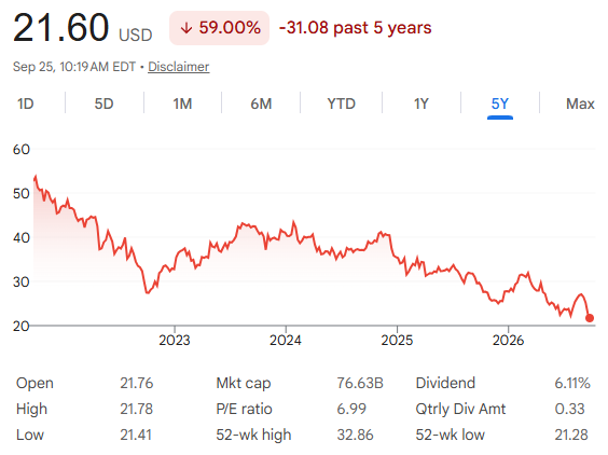
We highlighted Comcast at $21.60 per share, a valuation of less than 5x enterprise value to EBITDA and roughly 6x earnings. Intense pessimism surrounding the cable business, compounded by the Roberts family’s supervoting control, appears to obscure the value of the company’s collection of assets. The proposed mid-2027 separation and cost reductions could make those assets easier for investors to value independently.
Our thesis is that the Content & Experiences businesses — NBCUniversal, Peacock, Universal Pictures, theme parks and Sky Networks — could be worth approximately Comcast’s entire $78 billion equity market capitalization on its own. We estimate roughly $15 per Comcast share in potential value from this business, with meaningful strategic optionality from further media consolidation. The cable operation, despite broadband competition and a market perception of secular decline, serves approximately 31 million business and residential customers with a fast-growing wireless business. Even applying a low 4x EV/EBITDA multiple, we estimate another roughly $15 per share of value for Cable. We expect the Cable unit to pay out a large annual dividend to help support its valuation; it will also retain a 20% stake in the Content & Experiences spin.
Comcast’s balance sheet provides important support and is in many ways an “asset”: debt of less than 2x EBITDA, an average maturity of approximately 15 years and an average interest rate of 3.6%. The stock also offers a 6.1% dividend yield. The key risks are continued broadband erosion, execution of the split, and the possibility that the conglomerate discount persists. We see echoes of our Warner Bros. Discovery pitch from our 2024 conference, when the stock was trading at just $8.50 per share vs. its ultimate $30+ Paramount Skydance (NASDAQ: SKYD) take-out price: the parts should be worth considerably more than the whole.
Zillow (NASDAQ: Z or ZG) – A Contrary Bet on the Housing Market
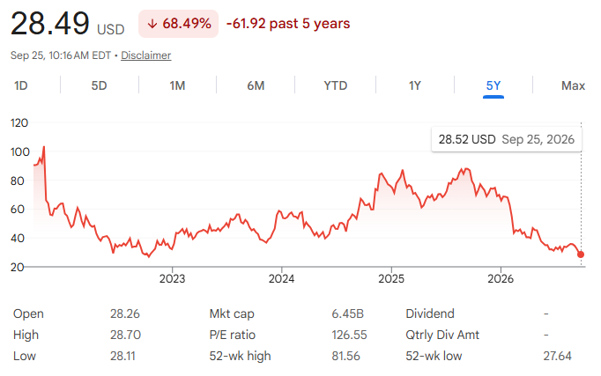
At approximately $28.50 per share, Zillow offers exposure to a category-leading marketplace trading at a sub-$7 billion market capitalization with a strong balance sheet. Existing-home sales are running at an annual pace of roughly four million, near 40-year lows, thanks to elevated mortgage rates and high home prices which has kept affordability strained. The absence of an obvious near-term catalyst has left housing-related stocks deeply out of favor.
Despite the weak backdrop, Zillow has continued to grow revenue at double-digit rates. Its “Preferred” referral model, which the company claims to deliver a revenue uplift of more than 20%, was approximately 65% penetrated at the time of the conference, leaving further runway. Its fast-growing Rentals and Mortgage businesses together generate more than $1 billion of revenue. Trading at roughly 9x estimated 2026 EBITDA, with stock compensation declining and share repurchases underway, we think the valuation fails to reflect the company’s earnings power in a more normal housing market.
AI disruption is a legitimate concern for online marketplaces, but our view is that Zillow’s superior monetization and deep industry relationships position it to be a valuable distribution partner for AI platforms, rather than a casualty. There is no guarantee housing turnover recovers quickly, but even a modest improvement could have an outsized impact. Thanks to Ted Bealin at Aptera Capital for the Zillow idea.
Gold (NYSE GLD; Physical Coins & Bars) – Fiscal and Monetary Regime Insurance

We also discussed adding to gold exposure through GLD and physical coins and bars, with gold near $4,150 per ounce at the conference. The central argument is less about short-term inflation forecasts than about long-term fiscal and monetary risks. We cited a federal deficit around 7% of GDP and asked what happens if the next downturn drives that deficit toward 10%–15%, particularly if capital gains and the wealth effect reverse. In such a scenario, policymakers might again be tempted by financial repression or 1950s-style yield-curve control, holding nominal interest rates below where markets would otherwise set them.
Demographics reinforce the concern. As baby boomers retire, entitlement spending is set to rise substantially, while the number of workers supporting each beneficiary declines. Reindustrialization, the need to rebuild defense capabilities for a world of drones, AI and space technology, and geopolitical conflict may all also add pressure to government budgets and real resources.
There is also a geopolitical dimension. Sanctions and changing global trade patterns raise questions about the long-term role of U.S. Treasury securities as the default reserve asset. Gold may play a larger role in international settlement, even if a formal return to a gold standard remains speculative. We favor owning some gold as insurance against monetary policy outcomes that are difficult to forecast — and, personally, have a preference for physical coins and bars alongside liquid market exposure. Gold can be volatile and produces no cash flow, but that is not the role we expect it to play.
**
Favorite Books & Media
Liaquat Ahamed: 1873: The Rothschilds, the First Great Depression, and the Making of the Modern World (Book)
Liaquat Ahamed, the Pulitzer Prize-winning author of Lords of Finance, has written a fascinating history of the Panic of 1873. During the 1850s and 1860s, rapidly expanding international bond markets helped finance an enormous railroad construction boom. The Rothschild banking family sat near the center of this new financial system. Railroads transformed commerce and created enduring economic value, but the investment frenzy also encouraged excessive borrowing, speculation and projects that could never earn an adequate return. When confidence broke, markets crashed from Vienna to New York, railroads and governments defaulted, and the ensuing downturn had far-reaching political and social consequences.
The parallels to the current AI infrastructure boom are hard to miss. Transformative technology can attract too much capital, and an industry can change the world while still producing disappointing returns for many investors. Ahamed also shows how monetary policy decisions, including the shift toward gold, compounded the crisis and contributed to years of deflation. It is a useful reminder that financing structures and policy responses can matter as much as the underlying technological innovation. A timely and worthwhile read for anyone thinking about today’s markets.
https://www.amazon.com/1873-Rothschilds-Depression-Making-Modern/dp/1594204179/

Odds on Open Podcast: Alix Pasquet on Finding an Edge in Investing
I enjoyed this 90-minute conversation with Alix Pasquet of Prime Macaya Capital on the Odds on Open podcast. Alix offers some thoughtful perspectives on how smaller, fundamentally oriented hedge funds can compete against the large multi-manager platforms. He discusses the three sources of investment edge — analytical, informational, and behavioral — along with his approach to idea generation, the importance of investor networks, and why he believes technical analysis can complement fundamental research.
I particularly liked his discussion of AI and the risk that younger analysts become overly dependent on these tools before developing their own analytical skills and judgment. His argument is that the best investors will combine traditional research skills with AI rather than outsource their thinking to it. Lots of practical insights for both experienced investors and those entering the business.
Dylan Patel and the Rise of SemiAnalysis – Substrate Magazine
An interesting profile of Dylan Patel, the founder of SemiAnalysis, which has emerged as one of the most influential research firms covering semiconductors and AI infrastructure. What started as a personal blog in 2020 has grown into a business with approximately 100 employees and projected revenue exceeding $100 million this year. Its customers include most of the world’s largest technology companies, and its research is regularly cited by executives at Nvidia, Microsoft, Meta, and OpenAI.
What I found particularly interesting is how SemiAnalysis has built a competitive advantage by combining deep industry relationships, proprietary supply-chain data, and detailed bottom-up financial and infrastructure models. Its analysts track everything from advanced chip packaging capacity and GPU shipments to individual data center construction projects, allowing them to make forecasts that often differ materially from Wall Street consensus. The newsletter itself now generates less than 5% of revenue, with the real business coming from proprietary data, research, and consulting.
It’s a fascinating example of how a relatively small, independent research organization can build a valuable information franchise in an increasingly complex industry. Patel has also launched a $500 million venture fund, of which we are pleased to be investors in.
https://substratemag.com/dylanpatel/?v=2
**
A Selection of Recent Tweets from @RagingVentures:
I was expecting the Big Bad Wolf, but the Anthropic $ANT S-1 actually read quite well.
A few takeaways:
– Mgmt is bullish that scaling law improvements will continue
– Recursive development is increasingly closing “the loop” in new model development and fueling an aggressive…— Raging Capital Ventures (@RagingVentures) October 27, 2026
$HAWK is a broken IPO now, trading at $11.50 vs $26 IPO price with nearly $5 per share in net cash. Biz is growing quickly with strong tailwinds & is capital efficient. Had two successful satellite cluster launches this week. Stock seems very attractive here, I have bought more. https://t.co/KhcIXbmUj4
— Raging Capital Ventures (@RagingVentures) October 23, 2026
Bought a bunch of $SKIN into this 20-1 reverse split: the company now has only 6.5 mm shares outstanding. $SKIN has some debt and equipment sales are struggling with high interest rates, but their high margin consumable revenues are stable and the business is starting to…
— Raging Capital Ventures (@RagingVentures) October 21, 2026
I tell my older friends that AI is like exercise – you need to spend at least an hour a day learning how to use it or you’re falling behind (and dying). https://t.co/yCiq0GG8GP
— Raging Capital Ventures (@RagingVentures) October 12, 2026
$EFXT is like the little engine that could… announces a major data center fabrication deal. https://t.co/sW3dZbBolC pic.twitter.com/FrAeKIDcXJ
— Raging Capital Ventures (@RagingVentures) October 1, 2026
Caught a nice move in $META as they have executed nicely on Muse.
However, I’m curious to see Muse’s retention stats. Muse’s agentic capabilities still seem like a bit of a novelty to me, and sometimes more of a hassle to use than a value-add.$META has also aggressively… https://t.co/5iVOY6Ri8e
— Raging Capital Ventures (@RagingVentures) September 25, 2026
I love both of these guys, and they provide some invaluable insights in this discussion, but this podcast will likely go down in the annals as peak compute bullishness. A lot of the math and assumptions are simply outlandish.
It reminds me of being 22 years old again in 1999,… https://t.co/lyX6L44sGs
— Raging Capital Ventures (@RagingVentures) August 26, 2026
I agree there are differences in HBM vs. NAND.
I said we are “around” the peak of the cycle, with $SNDK much more at risk.
Memory is an intensely cyclical business with a long history of booms and busts.
Cyclical peaks are typically associated with double and triple+ ordering,… https://t.co/5otLZZld76
— Raging Capital Ventures (@RagingVentures) August 27, 2026
Tough day at the office… pic.twitter.com/RQNo9CVZhh
— Raging Capital Ventures (@RagingVentures) August 21, 2026
It is simple: $NVDA is using vendor financing to avert margin pressure and market-share loss. https://t.co/IlD9IHVhP8
— Raging Capital Ventures (@RagingVentures) August 20, 2026
Excellent primer on @orrdavid’s background and investment approach ahead of my “fireside chat” interview with him at my fall NYC conference on October 1, 2026.
More details on the conference here – space is limited: https://t.co/IEMtdrPvyf https://t.co/zLf8JBInWA
— Raging Capital Ventures (@RagingVentures) August 12, 2026
**
“The undertaking was a splendid success in every respect, except financially.” — Andrew Carnegie, describing his Mississippi River railroad bridge project in his autobiography