March 26, 2026
Friends,
We are excited to share edited excerpts from our October 9, 2025 Ideas & Networking Conference fireside chat with Phil Colicchio, an expert on the restaurant and hospitality industry. Phil, along with his partner Trip Schneck, runs Colicchio Consulting, a firm that advises hotels, investors and real estate developers on high-profile, culturally relevant food and beverage partnerships. Phil, who’s also an attorney, has represented over 60 James Beard Award-winning chefs, restaurateurs, and industry professionals. He’s also a longtime friend of mine.
In our discussion, Phil provides the inside color on what makes the restaurant industry tick, including how deals are negotiated, the challenges of running a successful restaurant, restaurant economics, how real estate plays a role, and more. He also looks at the rise of institutional food groups, like Jean-Georges and Major Food Group. Plus, he shares insights on the New York City restaurant scene, including his favorite new and established restaurants. Finally, he shares some great stories about his cousin Tom Colicchio of Top Chef and Craft Restaurant fame.
Enjoy!
Best Regards,
William C. Martin
Topics in this Issue of An Entrepreneur’s Perspective:
- Interview with Phil Colicchio, Colicchio Consulting – An Insider’s Take on the Restaurant Industry
- Favorite Podcasts & Media
- Recent Tweets from @RagingVentures
**
Interview with Phil Colicchio, Colicchio Consulting – An Insider’s Take on the Restaurant Industry

This fireside chat originally occurred on October 9, 2025. ChatGPT was used to format and lightly edit the original discussion, using a “formal conversation” prompt.
Welcome! Tell us about Colicchio Consulting.
Colicchio Consulting was created by my partner Trip Schneck and me. I’m a classic recovering lawyer who, unintentionally, wound up dealing in a subspecialty of what became celebrity chef representation. Trip came from the hospitality REIT industry.
Early on during my time as an attorney, I represented the talent and the chefs; we no longer do that. We now represent the investors, the real estate side, the hotel groups. We learned early on that hotels were bringing in third party food and beverage partners and big chefs into Las Vegas, New York and California. They knew names, but they didn’t understand the deliverables. They didn’t understand how to contract with these groups. So it became very imbalanced. We saw an opportunity to assist those groups, helping them to, first, strategically identify why they needed something in a food and beverage program that was elevated, and then, how to go about selecting the right kind of talent for that.
If one were to launch a new casino in New York City, would they hire someone like you to identify the talent or do you just negotiate the deals?
Are you reading my emails? Haha, yes, that’s happening right now. There are going to be two licenses that are going to be downstate. One of them looks like it may go to a guy that owns a baseball team. They’ve passed all of their early tests. Their partner is the Hard Rock, not known for great restaurants, but the Hard Rock had the good sense to partner up with the Major Food Group. If you are New Yorkers, you might know the Major Food Group, two chefs and a real estate developer.
What restaurants are run by Major Food Group?
The Pool Room at the Four Seasons; one of the big Italian restaurants, Torrisi; and, of course, Carbone.
You originally got involved with the restaurant industry through your cousin, the famous chef Tom Colicchio. Can you tell us a little bit about that?
Well, we are a blue-collar family from Elizabeth, New Jersey. I was the family hero because I got A’s in school and could play a little baseball. I had a younger cousin, Tom, who was probably a little ADD and a bit of a slacker. We had no idea that he had any kind of culinary talent. We knew he had talent, with the opposite sex. He was really good on that front.
Tom got it in his head that he wanted to cook. And my uncle, his dad, was a prison guard, and he had access to the county prison’s library and he would bring Tom cookbooks home from the prison, and Tom would fool around in the kitchen. People have this idea that his mom taught him how to cook. My Aunt Beverly is fantastic, but she didn’t teach him how to cook. He really learned on his own. So, for those of you who don’t know, Tom Colicchio, my cousin, who has more James Beard Awards and New York Times stars than you can count, never went to culinary school. Really learned it on his own and learned it really in the New York market.
Was Gramercy Tavern his first big hit?
No, his first big hit was a restaurant called Mondrian. Those of you of a certain vintage may remember it. It was over by Central Park. He was 27, and he was awarded three stars by the New York Times critic William Grimes; that was how you got your rep in this city. No longer. Truthfully, it’s now about influencers and the Times is nice, but it’s not as important as it was. At 27, Tom really became one of the young toasts of the town. It was great. It was a really great experience to see somebody who worked his ass off to really get an opportunity.
Did he work for Danny Meyer at Gramercy after that? Or how quickly did he move there? When did he launch Craft?
If you say work for Danny Meyer, you’ll have Tom Colicchio in here quickly, yelling at you.
I know you negotiated the right deal.
Well. The negotiation came after he joined with Danny. My cousin Tom, who right now is a very sophisticated businessman, is literally the guy who came to me and said, I just signed this contract. Will you review it? That really happened. He’s much more sophisticated now. Ultimately, he and Danny, like a lot of successful partnerships, wound up having a divorce. We were able to keep that divorce very civil, very quiet. Until Tom released a memoir this year.
Was it a personality clash?
It was a vision clash. And at the risk of sounding like I am being negative towards Danny, which is not the intent, these were young guys who were still finding their way. Tom wanted to really grow. You wouldn’t know it today, but Danny was afraid to grow at that time. Grow in the sense of opening more restaurants. Mainly expanding Gramercy Tavern. There’s only two, but for a long time, there was never going to be a second one.
You mentioned Tom has a memoir out now.
He does, it’s worth reading.
Is it as good as Heat (by Mario Batali) or different?
Different than Heat… Different.
Tom had a big run at Gramercy, that was maybe the top restaurant in the city. When did he launch Craft?
He was in his 30s. He had had several years at Gramercy. Then Danny made a move to open 11 Madison and Tabla. Tabla was run by one of the great Indian American chefs, Floyd Cardoz, who passed away during Covid. He was a genius and really made a mark. Danny opened that up with some outside funding and didn’t invite Tom and a couple of the other Gramercy partners to participate. It was not a crime of commission. It was omission. He didn’t really understand what duties and loyalties he had to have as the president of a corporation. Fortunately, one of the investors was a Morgan Stanley guy and he was able to take Danny aside and say, Danny, people can get in trouble doing this. We really must straighten it out. That was when Tom had an opening to move out during a settlement conversation because it was pretty rough at the time. It worked out for both of them. A little better for Danny financially, but very well for Tom from a lot of other standpoints.
Tom launched Craft to great acclaim, and I bet he really made bank in Las Vegas, right?
The Las Vegas move was big; he was one of the early adopters out there. As I mentioned to you, the change in Las Vegas came when there was a recognition that you could make as much or more money through amenities as with gaming. Brought a real focus into the restaurant and chef world out there. Interestingly, Tom cut a deal and I was involved in it, but only a couple of years ago did I realize that the guy who ran that deal for the MGM was one of the guys who was convicted in the Varsity Blues scandal and ultimately had his conviction overturned by the Supreme Court. So he got his gaming license back. Things are funny out there.
Then Tom has the hit TV show, Top Chef.
A 20-year franchise. When Tom does something, he does it for a long time. It’s shocking to me that it’s a 20-year show. It’s become such an important part of American culture.
You ended up representing many of the early chefs coming out of there?
Well, yes, I didn’t want to because they were young and stupid, and they take up a lot of time when they’re young and stupid. I tried to be a good coach but in the early days, the contestants on the show were not good chefs. They were good personalities. Now, there’s a lot of talent. The show did great. Tom’s now an executive producer. He’s made out very, very well. And he is the only chef in America with a Best Chef in America award from James Beard and an Emmy Award. So, hooray for my cousin!
Awesome. Tell us more.
His cousin the lawyer told him not to do Top Chef, by the way. It made no sense at the time. There was a show called The Restaurant. I don’t know if any of you ever remember it, but it made Chef Rocco DiSpirito look like an idiot. And it took Rocco 15 years to recover. Top Chef came on the heels of that and I said, maybe you shouldn’t do this, you don’t have any editorial control. And he said, well, we’re opening up a restaurant in Las Vegas. Maybe it’ll help. And it helped.
Talk a little bit about the restaurant business today. You mentioned earlier the role of influencers on the marketing side. Then places like Manhattan, you’ve got these institutionalized food groups.
Big and small. I think perspective is important. In 2025, there are now over a million restaurants in the United States. In the US, over $1.5 trillion will be spent in restaurants this year. New York City has 17,000 restaurants across the five boroughs.
How many are fine dining?
Very few. About 70% of those 70,000 restaurants are single-unit operations. It’s primarily a small business community. The big ones are a lot of fun to read about. I just finished a very interesting book on Stanford White, the architect, and the same kind of nightlife that goes on now went on at the turn of the 1900s. I mean, Stan, he could put us all to shame the partying that he did, but it was all restaurant related. All this crazy stuff went down in New York restaurants. There’s also a great book, if you’re ever interested, called Appetite City by William Grimes. It’s the history of restaurants in New York City. It’s an extraordinary book, and it really is well written and kind of parallels the restaurant world to the changing economies that went on in New York.
How many of the restaurants are good businesses? Do you invest in restaurants?
I have, I try not to. When people came to my office to invest in restaurants, back in the day when you’d go to your lawyer’s office, if they really wanted to invest in some of these restaurants, I’d make them effectively sign a waiver. It was one big waiver, that said, “Phil Colicchio told me not to invest in restaurants.” If they signed it, we’d go forward. Very often, you’re either providing assistance or you are doing a vanity investment. Or you know that this group has had success. Bet on past success, because it’s all about operations; about labor management. It’s a very complicated business. And if you make 10% in a restaurant, you are in the Hall of Fame. You know, if you make 20%, you’re really a Hall of Famer.
A restaurant like Gramercy or Tribeca Grill or Carbone, what do they make?
They do very well. Hall of Fame numbers. Why do you like Gramercy and Carbone and those restaurants? I’ll answer for you. Besides the fact that the food is good.
Amazing atmosphere.
Right, and what makes the atmosphere? Design and people. Labor. If you do not have a high level of service, you are not going to win that battle, right? The National Restaurant Association, also known as the NRA, in their annual report says that 64% of diners in fine establishments are willing to overlook price in favor of experiencing good service. Service is expensive at the restaurant level. It means people. And it means training. Those restaurants who are employing those staffs and training those staffs have a much lower margin of profit than you would imagine.
Doesn’t Gramercy make $5 or $10 million a year?
Gross. They don’t make that net. They’re probably making a couple million bucks. But that’s a cog in a very big wheel now. Gramercy Tavern was the original wheel.
Which ultimately led to Shake Shack too, that was pretty good wheel.
Danny did Shake Shack. My cousin Tom did Witchcraft. Shake Shack did better.
How about the Jean-Georges group, they have 60 restaurants and dozens of consulting contracts. Do they get paid a fixed amount to come into some hotel in Dubai? Are there guarantees?
That’s a great question. In those high-level deal structures you’ll get a management fee, usually a minimum base, for a group like Jean-Georges. They push the envelope into minimum bases that are close to $1 million a year and then a percentage of top line revenue. Now that I represent the ownership side, the money side, we press that down quite a bit. But back in the day, there were no governors on this stuff. If you had a big name, you got a big check without a lot of deliverables.
So is Jean-Georges very profitable?
Yeah, they make a lot. They’re a very, very, well run machine.
I think Bill Ackman had a stake in that company.
Yes. That’s like a lot of the bigger real estate groups that decided to partner with chefs. They saw the light and recognized that if we don’t partner with these groups, we can’t control anything.
What does a head chef make at one of the top Jean-Georges restaurants?
$250,000. I mean, it’s no longer a surprise for a head chef to make in the two hundreds. They can make more, depending upon the size of the restaurant. Again, there’s a lot more to being the executive chef than just teaching and cooking. A lot more of it is economics now.
Talk about your new entrepreneurial project, Central Perk.
A good idea or bad idea? I’m still waiting to find out. We just announced the first New York opening. It will be open in Times Square before Christmas, right at 47th and seventh, where the Edition Hotel is located. It’s a license from Warner Brothers. Central Perk is the non-human character in the show Friends, which is still the most streamed show in the world by far. It’s Warner Brothers’ second most valuable property behind Harry Potter. We were able to license that because, naturally, we pitched them to license something completely different. They came back and said, we like the way you’re thinking about this: We’ve said, “no, thank you” to a lot of people who came in here to ask for Central Perk. We’d like you to give it a run. And the group that I’m with thought we became the dog who chases cars and then finally catches one. Now, what do I do? So we’re now in that, what do I do moment? We opened our first one in Boston two years ago. It’s performed very well. We expect this one to perform very, very well. Lots of merchandise opportunities.
Almost like the Hard Rock concept?
Very much. I learned recently that the Hard Rock here in New York, over there on Broadway, they do more in merch by far than they do in food and beverage. If somebody is buying Bubba Gump anything, introduce me to them, please, because, I have a bridge right in Brooklyn to sell them. Bubba Gump is relevant somehow??
How much does that restaurant make a year?
Couldn’t tell you. It’s a one off.
That’s the only one.
Yeah. Thank God.
Talk about Culinary Institute and all your work there.
One of the things that I did when I was practicing, we got to work a lot with the Culinary Institute. A lot of the chefs that I worked with came out of there. We developed relationships with the then president of the CIA, Tim Ryan, who’s become a very close friend. I helped to bring an entrepreneurship program there. They were teaching the young people a lot about culinary, but not enough about business. They ultimately created a graduate program that is now the “School of Graduate and Professional Studies” at the Culinary Institute of America. One of my prouder involvements is helping to create that program.
Chefs learn how to balance their checkbooks, basically?
It’s more for restaurateurs now. I mean, it’s much more sophisticated and learning about capital, learning about real estate; there’s woefully bad training in the culinary community about real estate. They always think of real estate is the enemy. Real estate is the only way you can win. You have to change attitudes about it. The real estate community hasn’t helped in that regard.
The restaurant business is amazingly difficult. I mean, I was fortunate to be an early investor in Toast, but the complexity in the restaurant business, the logistics of running a restaurant, not to mention the labor, but all the other things. I mean few businesses are as hard as that.
It’s hard and yet it employs 16 million people a year. It’s the second largest sector. It’s shocking.
That’s what I always said about Toast: Toast is really just a payroll business.
You got it. The more data you can capture, frankly, the more efficient you can make your restaurant. And that ultimately benefits the consumer, the guests. I don’t like using the word consumer when I talk about restaurants. Your guests, everybody’s guests.
Audience Question: Do you patent chef’s dishes?
You can’t. That’s a really great question. You still cannot patent a recipe. You can protect the recipe, though. You can still keep ingredients secret.
The Jean-George tuna tartare?
It’s anybody’s game. I learned that a long time ago. And by the way, that’s been litigated ten times over. And it’s usually litigated once a year, somewhere. But no, you cannot trademark a recipe. You can trademark a name. You can trademark equipment used to produce a dish, you can do a lot of that, but you can’t trademark a recipe. The best chefs will say, here’s the recipe. Try to cook it as well as I can, and good luck. Because if you don’t have all of the equipment that they have, you’re really not going to be able to produce it.
Audience Question: One of the very, very many lessons from McDonald’s is the value in owning the real estate of a restaurant. Do you see that at all? Because it seems to me like every restauranteur does not actually own their real estate.
Well, we’re all jaded New Yorkers here, right? You can’t buy anything here. I mean, it’s next to impossible. Danny was in the paper probably 5 or 6 years ago, boohooing that he had to close Union Square Cafe because his rent went up. Well, Danny could have bought that building ten times over ten years ago. Right? But he chose not to. And it sounds like I’m slamming him. I’m not. He’s just such a big, ubiquitous example.
Around the country, outside of New York, in markets where real estate is less expensive, I see a lot more real estate ownership by small groups. If you have the real estate to sell along with your business, you do a lot better. In our area, the Jersey Shore has a lot of restaurants with owned real estate because they’re generational. But now it’s still much more difficult and expensive. But if you can own it, own it. And part of the teaching that I do actually talks about that. If you go to a bank as a restaurateur for a loan, they usually laugh you out. But if you go to a bank for a real estate loan, it’s a different conversation, right? And so we talk through how to do that.
It’s so expensive obviously in Manhattan. So you have farm team towns, right? I’m always shocked at how good the restaurants are in Philly, can you talk about that dynamic?
Philadelphia is without doubt the leading restaurant laboratory in the country. It’s affordable to get into space there. The town is geographically huge. The culture, there’s every bit as many languages spoken in Philadelphia as there are in New York City. That marks in the 50s. You have got an incredible base of talent there and you can afford to live there. Ten years ago, 12 years ago, chefs in New York who had families were migrating to Philadelphia because they could afford homes and they could get their kids into schools. When you couldn’t do it here, because it’s just unaffordable to live here.
What are other cities like Philly in the country?
Austin, Charleston, but not anymore. The boomtowns.
Why not anymore?
Charleston is geographically small, and it has too many people and too many restaurants now and not enough labor. If you can’t get the labor, you can’t create the experience. It’s literally physically impossible. Unlike a lot of the other things you talked about today, this is literally a people business.
Audience Question: A lifetime ago, I was a busboy down in Atlantic City and we always used to bat around the question of which restaurants perform better for the waiters? The ones that pooled all the tips or where each waiter kept their own tips. It’s just an inside baseball question.
You have no idea how pregnant that question is because there are many arcane statutes that deal with it. Look, everybody would rather have tips that are not pooled. If you’re a good waiter, you’re going to get tipped better. You’re going to work harder, you’re going to know how to open wine, you’re going to know how to upsell, right? Which is the key to being a good waiter, right? Being a very nuanced upseller and provide good service.
Tip pooling, though, is the law in a lot of jurisdictions. And God forbid that a manager, who’s working every bit as hard as the waitstaff, shares in a tip pool, then there’s a class action suit in the wings and everything goes crazy.
Again, back to the Tom Danny Meyer stories. There was a movement in New York City not too long ago, you may remember, about saying, we’re going to do away with tipping, and we’re just going to add it into the check. Well guess what? Two weeks into that, it was the waitstaff who called bullshit on that. And said, we’re not going to work. We’re going to go to work over at over at the steakhouse where they don’t do that because I’m making $150,000- $165,000 a year. We don’t want to share those tips.
That’s what a good waiter makes?
More in this city. Good waiters can do easily in the twos and sometimes much higher.
One quick thing, because you pointed it out earlier. Who knows the current minimum wage in New York City? $16.50. If the current leading candidate in New York wins, in 2030 the minimum wage could be $30. If those 70% of single unit restaurants that are out there, they’re not all mom and pop, but if 70% of those restaurants have to pay $30 an hour to their staff, look for a reduction in the number of restaurants in New York City quickly.
And I’ll go out on a limb with a prediction that a lot of restaurants will close in New York City because of rising real estate costs. Because when the retail crisis happened a few years ago, a lot of space came available. The brokers, they’re not all that creative, in my experience, but the brokers started trying to transition everything into restaurants and in the brokerage world, it was sad, but “if it vents, it rents.” That was the way it was put. A lot of restaurants were plugged in and a lot of landlords put a lot of tenant improvement money in, because that was the only business that would come in and lease.
Well, the metrics haven’t changed for the better. 20% to 25% of restaurants in the United States that are open don’t make it through year one. That’s just the economics, right? So you’re going to see some empty space in this city, I think, in the very near future, not because of who the new mayor may be, but it’s because they are, frankly, paying too much rent. I think you’re going to see a little swoon in what is currently a very robust restaurant environment.
Any favorite restaurants in New York that you recommend? Off the beaten path that we haven’t heard of?
Alta Calidad in Brooklyn is tremendous. The best thing you can do if you’re in this thing and you like these restaurants and food, look for the Michelin Guide “Bib” restaurants. They’re usually the smaller restaurants that are not super popular, don’t get a lot of attention. The Bib notice is a recognition of excellence and usually they are chef run. If I’m looking, that’s what I look for when I’m traveling.
The favorite restaurant question? Obviously I’ve got my cousin, so I can’t say anything negative, but if you put a gun to my head, I would tell you that I would have my last meal at Minetta Tavern because I have never had anything but a great time at Minetta Tavern. Not the best restaurant in the city, but it’s the coolest place you can possibly be.
I think with that, we’re going to grab some drinks, so thank you!
**
Invest Like the Best: The Art of Public and Private Market Investing with D1’s Dan Sundheim
Dan Sundheim is the founder of D1 Capital Partners, a large crossover fund investing in both public and private technology companies including OpenAI and Anthropic. While I’m not generally a fan of the D1 approach, I thought this episode of Invest Like the Best contained some interesting perspectives on the AI ecosystem.
Sundheim argued that hyperscaler cloud providers may ultimately face margin pressure as AI companies become larger customers and potentially bring more of their own compute in-house. He also compared the lucidity of essays from Anthropic CEO Dario Amodei to the early shareholder letters of Jeff Bezos. Finally, he reflected on D1’s drawdown during the 2021–2022 market downturn and how the firm has since implemented tighter risk controls and shifted toward a “singles and doubles” investing approach.
Stan Druckenmiller “Playlist” / Kevin Warsh Hoover Institution Interview
I’ve heard many of these Stan Druckenmiller interviews over the years and have been lucky to see Mr. Druckenmiller in person at Grant’s on numerous occasions. With Druck’s longtime partner Kevin Warsh nominated to be the new Fed Chair, his thoughts on macro and government policy that he shares in this interview are even more relevant. Full Druckenmiller Playlist: https://www.youtube.com/playlist?list=PLE9IXNXDFTKbMd_OST6nfz2Dt6VYvVoh4
On the topic of Kevin Warsh, this is a solid interview he did with the Hoover Institute in mid-2025. Warsh has a much more grounded view of how markets actually work than the slew of recent Fed Chairs that the country (often influenced by Princeton Econ-thinking) has suffered under, and Warsh has been influenced by Milton Friedman, Paul Volcker, and economists that advocated for a rules-based Federal Reserve such as John Taylor (who created the Taylor Rule, a systematic framework for setting interest rates) and Carnegie Mellon economist Allan Meltzer. Here’s the full interview: https://www.youtube.com/watch?v=qVFEcg-RIAk
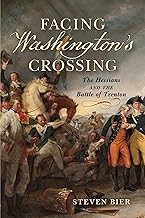
Facing Washington’s Crossing: The Hessians and the Battle of Trenton (Book by Steven Bier)
This book tells the story of the American Revolution from the perspective of the Hessian soldiers who fought for Britain, focusing on the German troops sent from the small principality of Hesse-Cassel. Author Steven Bier, a friend of mine who lives near Princeton, draws on newly translated documents and obscure sources to follow a Hessian brigade through the early campaigns of the war, from their victories in New York to their stunning defeat at the Battle of Trenton after Washington’s famous crossing of the Delaware.
One of the most fascinating aspects is the background of the Hessian ruler who leased his army to Britain. Far from the caricature of a cynical mercenary prince, he was deeply influenced by Enlightenment thinkers such as Voltaire and used the money raised from hiring out his army (which, unironically, was headed to fight against the “enlightened” ideas of the American Revolution) to fund social programs, urban improvements, and cultural projects in his small German state. Even in a relatively poor province, he opened one of the world’s first free public museums and pursued a surprisingly progressive vision of governance, making the story of the Hessians far more complex than the traditional Revolutionary War narrative suggests.
Given America’s 250th Anniversary this year, this has been a very thoughtful and interesting read that I recommend. You can order it here: https://a.co/d/06wovlqA
Why I Cook (Book by Tom Colicchio)
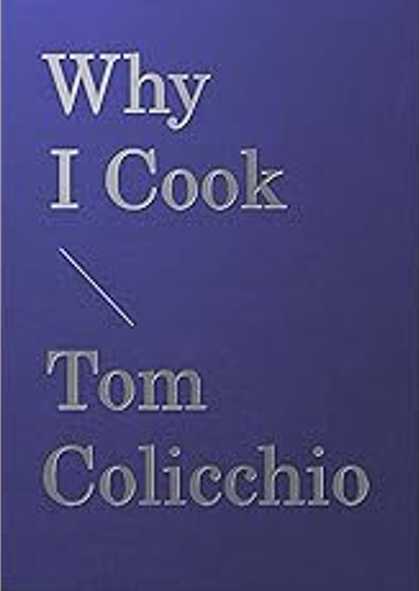
Following up on my interview with Phil Colicchio (above), I enjoyed reading Why I Cook, a book by Phil’s cousin, Tom Colicchio. The book is very well written and enjoyable to read, combining lots of stories from growing up in Elizabeth NJ, his first restaurant jobs, opening Gramercy Tavern with Danny Meyer, launching Craft Restaurant, and later becoming a celebrity through the Top Chef TV Show. The book also includes many wonderful recipes, in simple/classic Tom Colicchio style. As Phil mentioned, Tom taught himself to cook – and the stories around that are fantastic. This is a fun and easy read!
**
A Selection of Recent Tweets from @RagingVentures:
$PACK is the stock everyone loves to hate (often for good reason), but $AMZN and $WMT deals are exciting and in early innings. Been buying stock below $3.50 this morning.
— Raging Capital Ventures (@RagingVentures) March 9, 2026
I don’t share the view that private credit necessarily equals the end of the world, bought some $APO this morning around $105.50
— Raging Capital Ventures (@RagingVentures) March 9, 2026
Proud to be an investor in UFORCE (https://t.co/XZYXrXhj3E) as it comes out of stealth with a financing that is co-led by our friends at @ShieldCapVC.
UFORCE combines nine Ukrainian defense companies and their battle-proven autonomous aerial, maritime and ground unmanned… pic.twitter.com/lKkx9JuNry
— Raging Capital Ventures (@RagingVentures) March 5, 2026
It has been a roller coaster, but proud to see $EFXT / $EFX.TO trade above $23 USD today. We were buying this from $2.75 – $5 in 2021 and 2022 and stuck with it as it cleaned up its balance sheet, dealt with some hiccups, and steadily built value.
The valuation at $23 is no… https://t.co/RDoHMzMP2X
— Raging Capital Ventures (@RagingVentures) February 27, 2026
$SBGI bounced 17% today to $16.30 on a solid Q4 and “in-line” 2026 guidance.
Although I remain constructive on $SBGI, seeing potential for a $21-23 stock price IF Ventures is spun and IF they’re able to do an accretive deal with $SSP to make their broadcast TV biz (borderline)… https://t.co/ISz4N6iFSY
— Raging Capital Ventures (@RagingVentures) February 27, 2026
You may have to hold your nose, but my bet is that a basket of current perceived AI losers such as $WDAY / $TOST / $BL / $HUBS nicely outperforms perceived AI winners such as $MU / $SNDK / $BE / $GLW over the next 18 months.
Valuation matters more than good looks.
Godspeed!
— Raging Capital Ventures (@RagingVentures) February 26, 2026
I’ve been on and off short $MO, and am short again here at $69.70. Dividend is clearly more attractive in a lower rate environment, but cig volumes continue to collapse, Marlboro is overpriced and bleeding share, and they punch below their weight in smokeless and e-cigs.
— Raging Capital Ventures (@RagingVentures) February 26, 2026
I wrote May $280 $HUBS calls for around $29 bucks against a lot of the stock I bought in the low $200s a couple of weeks ago.
— Raging Capital Ventures (@RagingVentures) February 26, 2026
Added to my $WDAY position AH ~$118.50. $WDAY is a critical system of record for large enterprises that is poised to benefit from AI. It is rolling out labor saving AI agents (which, for example, handle tedious payroll compliance) that sit on top of its data store, as well as…
— Raging Capital Ventures (@RagingVentures) February 25, 2026
Question about Fairfax India’s $FFXDF /$FIH-U.TO Bangalore Airport position on the Fairfax Financial call $FRFHF. Bangalore is a gem of a position and I am bullish on Fairfax India over the next few years. pic.twitter.com/HxEAkn3YIi
— Raging Capital Ventures (@RagingVentures) February 26, 2026
$FRFHF / $FFH.TO — Still cheap even though the stock is up 400%+. Haven’t sold a share in years and would buy more today with excess capital. https://t.co/Uhz15CXxzf
— Raging Capital Ventures (@RagingVentures) February 26, 2026
Folks are drinking a lot of Kool Aid https://t.co/kDhOzfheMR
— Raging Capital Ventures (@RagingVentures) February 14, 2026
I bought a bunch of $WLTH this week.
At $7.80, this broken IPO (went public in Dec at $14) is a sub $1.1 b EV with $400 mm+ in cash and no debt. Trades for around 6.5x run rate EV/EBITDA and is capital light.
Primary risk is lower interest rates which could lead to outflows…
— Raging Capital Ventures (@RagingVentures) February 14, 2026
Bought some $TOST after hours sub $23.
Limited to no AI-disruption risk, and an incredible long-term franchise.
Q4 earnings and guide seem fine, seems like $TOST’s usual conservatism.$TOST has a strong balance sheet and has done a great job with operating leverage.
The…
— Raging Capital Ventures (@RagingVentures) February 12, 2026
Pleased to have invested (a small sum) in Anthropic’s 2023 Series C financing at a $4.1 b pre-money valuation via an AngelList syndicate
Knock on wood – let’s get it public! https://t.co/MW8VKp58iM
— Raging Capital Ventures (@RagingVentures) February 13, 2026
$LTCH, which is rebranding as “DOOR”, is now current on its SEC filings. The company hopes to soon list on the OTCID market.
The company has a real biz and balance sheet, but is still burning cash. Completing these historical audits should def lead to reduced costs moving fwd! https://t.co/iBgfeHrlEs
— Raging Capital Ventures (@RagingVentures) February 13, 2026
**
“You can always count on the Americans to do the right thing, after they have exhausted all the other possibilities.”
– Winston Churchill